Wednesday, 16 November 2011

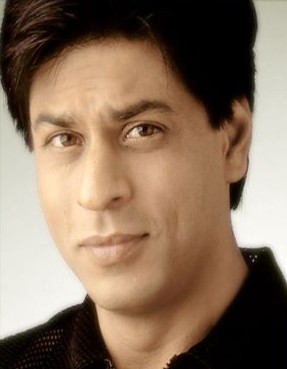
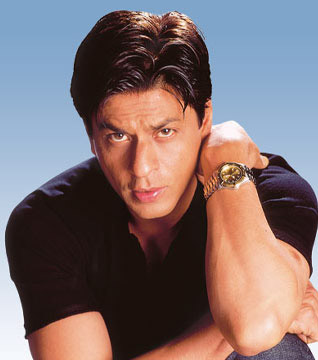
Shahrukh khan

Shahrukh khan biography
Shahrukh Khan was born on 2nd November 1965. He was brought up in Delhi. He has a sister named Shehnaaz, Wife Gauri Khan, And a dog Named Chewbacca. Shah Rukh Khan has won several awards for his outstanding performance in Darr (1993), Dilwale Dulhania Le Jayenge (1995), Dil To Pagal Hai (1997), and Kuch Kuch Hota Hai (1998). Right now he is the top most actor in the India. His recent hit Baadshah (1999) has also earned many praises. His latest hits are Chak De India! (2007), and Om Shanti Om (2007).

IMDb Mini Biography By: rajju, rajju@email.com

Mini Biography
Shahrukh started his career on a TV serial called "Fauji" (1988), that won him instant recognition. He also acted in another TV soap called "Circus" (1989). He was born and raised in Delhi, and he was equally brilliant in studies and sports. Fell in love with a girl called Gauri Chibba who was then studying in Loreto Delhi. He later married her before he got his break in Bollywood. Currently, he is the most sought after actor in India. Has a son called Aryan Khan and a daughter named Suhana Khan.

IMDb Mini Biography By: Phoebe <phoebe@cybergal.com>

Mini Biography
There is not a dot in Bollywood that does not carry Shahrukh Khan's name. He was born on 2 November 1965 in New Delhi, India. He married Gauri Khan on 25 October 1991. They have two children, son Aryan Khan (b. 1997) and daughter Suhana (b. 2000). Khan started out his career appearing in several television serials in the late 1980s. He made his film debut with the commercially successful Deewana (1992). Since then, he has been part of numerous commercial successes, as well as having delivered a variety of critically acclaimed performances. During his years in the Indian film industry, he has won seven Film Fare Best actor awards and has had significant box office success. Some of his films includes: Darr (1993), Baazigar (1993), Anjaam (1994), Kuch Kuch Hota Hai (1998), Om Shanti om (2007), Chak De India (2007) among others.

IMDb Mini Biography By: gavin (gunmasterM@hotmail.com)

Spouse
Gauri Khan (25 October 1991 - present) 2 children

Trade Mark
His Dimples

His Smile


Trivia
Studied in St. Columba's school, New Delhi, where he was awarded the 'Sword of Honor', essentially the award for best student.

Although his birth name is spelled Shahrukh, he prefers and signs his name as Shah Rukh.

Hindi megastar

Father of Aryan Khan and Suhana Khan.

2 children with Gauri, Aryan and Suhana

He agreed to star in Aditya Chopra's films without looking at the script first.

One of the four Khans that ruled Bollywood in the 1990s till now (2000's). The other three are Salman Khan, Saif Ali Khan and Aamir Khan.

Formed a popular screen couple with Kajol and Juhi Chawla.

Runs a production company "Dreamz Unlimited" with actress, friend, co-star Juhi Chawla and director, friend Aziz Mirza.

Named one of Time Magazine's 20 Asian Heroes under 40 (2004)

His son, Aryan Khan, portrayed SRK as an infant in Kabhi Khushi Kabhie Gham... (2001).

Son, Aryan Khan, voice of Tez Lajawaab (Dash), character for Hindi dubbed version of Disney's animated film, The Incredibles (Hum Hain Lajawaab).

Shah Rukh and his wife, Gauri Khan, own the production company "Red Chilies Entertainments", which Shah Rukh started for friend and colleague, director/choreographer Farah Khan, for her debut directorial film - Main Hoon Na (2004).

Purchased a villa on a man made island on the coast of Dubai in the United Arab Emirates.

#74 on E!'s 101 Hottest Celebrity Bodies Countdown (aired January 2006)

Was not very good at Hindi in school, until his mother promised to take him to the cinema if he passed. As he loved films,he got top marks from then on.

His father ran a transport company and his mother was a magistrate.

Gets along very well with former co-stars Juhi Chawla and Preity Zinta.

Loves computer games, video games and hi-tech gadgets.

His first name "Shahrukh" means "face of the king".

Resides in a mansion called Mannat in Mumbai, India.

Being a Muslim man married to a Hindu woman, he and his wife combine both religious backgrounds into their children's education.

His parents died before he entered movies. Shahrukh considers it a big regret that they couldn't see what their son was to become.

Has a mannequin of himself in Madame Tussaud's Museum in England. Along with Salman Khan, Kareena Kapoor, Amitabh Bachchan, and Aishwarya Rai.

He has a dog called Chewbacca.

He has an elder sister named Shehnaz Lalarukh.

Father is Meer Mohammad Taj Khan, mother is Lateef Fatima Khan.

Fond of BMW cars and owns a number of them including the latest models.

His favorite drink is Pepsi Cola.

Best friends with Karan Johar, Arjun Rampal,Farhan Akhtar, Saif Ali Khan, Hrithik Roshan and his wife Sussane Khan Roshan, Preity Zinta,Vivek Vaswani,Vivek Oberoi, Juhi Chawla and her husband Jai Metha, Rani Mukherjee, Arbaaz Khan, Sajid Khan, Jackie Shroff, Anil Kapoor, Kajol, Malaika Arora , Chunky Pandey and his wife and Mushtaq Sheikh.

Younger brother of Shehnaz Lalarukh.

Suffers from back, knee and neck problems.

Firmly insists and had promised himself that he would never kiss on the lips of any of his female co-stars after he had done the movie Maya Memsaab.

Launched Deepika Padukone's career in Bollywood.

His Father Meer Mohammed Taj Khan died of Cancer in 1981 and his Mother Lateef Fatima Khan died of complications in Diabetes in 1991.

He has been awarded the Ordre des Arts et des Lettres (Order of the Arts and Literature) award by the French government for his Exceptional Career.

Launched his perfume "SK" with the French perfumers and Jeannes Arthes.

The reason why Khan took up Mass Communications (film making) is because he loved Television commercials.

Had Graduated from Hansraj College, Delhi University and followed it up with a Masters Degree in Mass Communications (Film making) from Jamiya Milia Islamiya University, in New Delhi, but after a year Shah Rukh opted out as he had to make his acting career in Bollywood.

He had captained all teams in football, cricket and hockey and even played cricket at Zone and National level.

At school he was an ace in Hindi, Electronics and Biology but wasn't good at all in Mathematics.

His debut film was Dil Aashna Hai but due to the delay in the release of the film Deewana was considered as his debut film.

His acting career in Bollywood was launched by his friend Vivek Vaswani and Hema Malini.

Is very scared of riding horses.

Was not at all interested to act in Bollywood films but then he had decided to act in films to secure his families future and earn a lot of money.

Knew Manoj Bajpai as they both studied acting in the same theatre group with Barry John.

For a short span of time Shahrukh ran a restaurant in Dariya Ganj in New Delhi, India.

SRK joined Barry John's theatre group in New Delhi and learned acting from him, Barry John also taught acting to Manoj Bajpai in his theatre group.

Owns three Production Houses in India, Dreamz Unlimited, Red Chillies Entertainment and Red Chillies Idiot Box. Red Chillies Idiot Box Production house will start producing Television Serials in India.

Has started producing Television Serials in India.

Turned down the Quiz Master's (Prem Kapoor) role in Slumdog Millionaire and the role went to Anil Kapoor.

Owns a VFX company, Red Chillies VFX.


Personal Quotes
(December 2001, about Hrithik Roshan): I wish I looked as good as he does. And I wish I danced as well as he does!

Yes, I do have a close circle of friends and I am very fortunate to have them as friends. I feel very close to them I think friends are everything in life after your family. You come across lots of people all the time but you only make very few friends and you have to be true to them otherwise what's the point in life?

I'd rather sink trying to be different, than stay afloat like everyone else

I cannot repay my fans for what they have done for me, they have given me so much love and that love has taken me to the number 1 position where I am today, the only thing I can do for my fans is to never stop working, and to do films till the very end, it is the only way I can express my love for them.

To me, Devdas is the end of love stories. I've portrayed an obsessed lover, a nice lover, an angry lover, a romantic lover. And now I've played Devdas. For someone who doesn't even like love stories, I've played an awful lot of lovers. Personally speaking, I wouldn't see any of the romantic films I've acted in.

I'm the luckiest man in the world and I don't want to hide from the faces I'm acting for. So I don't surround myself with guards, I've never given an interview in which I've said I feel bad that I can't go shopping or I can't go to Chowpatty and eat bhelpuri without being mobbed. I'm not the kind of guy who goes out wearing dark glasses (I don't think I'm a big enough star to hide behind them, honest). I go to see movies in the cinema theatres, I go to restaurants with my family and friends even though I know people are going to disturb me there.

God has become a generic term like `mind blowing.' It is embarrassing. I would have said that to Amitabh Bachchan, Naseeruddin Shah, Nana Patekar. I used to tell them I want to stand in the same space as you. I've told Kamal Haasan, I just want to touch you. They are the gods of acting. When people call me God, I say, no, I'm still an angel or saint of acting. I still have a long way to go.

(August 2004): Awards that ignore me are losers.

(August 2004): I'm try-sexual. I try anything that's sexual.

(August 2004): I have no competition. Every year the names I'm pitted against keep changing. You can't cream the competition, you have to kill it.

I keep hearing that our films are escapist and unreal but I find our films the most real in the world. We don't have people going up in a rocket and single-handedly blowing up a meteor. We don't have a president on Air Force One saving the world or things coming out of people's stomachs. Our fantasies and escapism are real. It's just people singing and dancing in the street. If England had won the World Cup you would have seen people singing and dancing like that.

I don't like wearing dark glasses. I'm happy with the fact that people know me. I want people to scream and shout at me, I want people to trouble me when I'm having lunch, I like six bodyguards around me. I love being a star. I find it very strange when people who are famous say they don't want to be photographed. I don't want to be photographed first thing in the morning, I don't want people peeping into my bedroom, but besides that, it's a wonderful life.

"I haven't given up smoking. I'm very clear about it, it's a personal choice. I want to cut down on it. It shouldn't be made into an issue to say, damn good or damn bad. Whether I give it up or not shouldn't be an issue." (Movie Mag, May 2006)

"I was supposed to have done Rang De Basanti (2006), the guy on the motorbike. I didn't have the dates. They were shooting in Delhi and the dates were clashing with Paheli." (Movie Mag, May 2006)

"It's not like Steven Spielberg is waiting with a script for me. I don't think I'll ever be offered a great international film in my lifetime, so I'd rather be a king here. Moreover, Indian cinema is the greatest in the world. But of course, after spending three months in LA, London, and New York I found that our cinema is a little exaggerated. To make a mark in the West we have to reach their level without losing our identity, culture or songs. I don't want to star in a Hollywood film, but want to make a film that crosses over universally." (Movie Mag, May 2006)

On trying to get Paheli (2005) an Oscar nomination: "There's a misreport here about our lobbying at the Oscars. The understanding that we have of the Oscars is very different from how it really is. Because Indian film, foreign films are not known, you're supposed to hire a PR company which we did. It's not as if you just go there, show your films, lobby and talk to them. You're not allowed to lobby as in you're not allowed to meet the Academy members, talk to them or even make a call to them. You just keep advertising in the 'For Consideration For Oscars' category. We took out full page ads in papers like Variety and Hollywood Reporter. The only good thing we did was that we advertised very frequently, it was promoted on the same scale as the biggest of films. We did it because we could afford it." (Movie Mag, May 2006)

"I felt Ashoka the Great (2001) should have been chosen for the Oscars. We had worked towards that. We had these international distributors for it. We were the first to actually release an Indian film internationally in traditionally non-Indian theaters. We spent a lot of money and lost a lot of money too. We were the first to put up boardings in London, in tube stations. We did speak to everyone who was anyone here, wondering if Asoka could go to the Oscars. But the one that got chosen was Lagaan: Once Upon a Time in India (2001) which was even better. So we had no complaints. After that I didn't make any film for the foreign market." (Movie Mag, May 2006)

You must respect your seniors, bu never get intimidated by them. Winning should be a habit, not an option. The four Hs are important when you play to win --- honesty, humor, hard work and a bit of haraamipan.

I don't look at the figures that my movies make. The only figures I look at are girl's figures. (When asked to comment on what he felt about the figures his movies gross.)

Whenever I fail as a father or husband... a toy and a diamond always works.

If I talk to a girl, it's assumed that I'm having a scene with her. If I don't, then it's assumed that I'm gay.

I don't kiss on screen. Period.

There are only two Khans. Ghenghis Khan and Shahrukh Khan

Sex is not required to sell my film. My name is enough.

You never win the silver, you only lose the gold.

I am very shy. If I am flying British Airways and the air hostess asks me two questions, and I don't understand her accent - I will go hungry for the entire flight.

The dream I chased, took me on a journey. A journey more rewarding then the goals, the achievements. When I look back it's like facing a million mirrors. Each reflection opens a window. A window to the world I've just discovered. The world I want to share with all of you.

If I am a role model, I must be the worst one in the world.

I've never had a girl make a pass at me.

Togetherness, passion, laughter, faith, trust and jealousy are the essential ingredients of love.

The collar-bone is my favorite part of the human body.

If asking me whether sleeping with X or Y gives the media pleasure, then so be it. It's a small price to pay.


Where Are They Now
(September 2004) He is doing a world wide concert with Preity Zinta, Saif Ali Khan, Rani Mukherjee, Arjun Rampal, and Priyanka Chopra.

(June 2009) Shooting for My Name is Khan in San Fransisco.
Shahrukh khan
Shahrukh khan
Shahrukh khan
Shahrukh khan
Shahrukh khan
Shahrukh khan
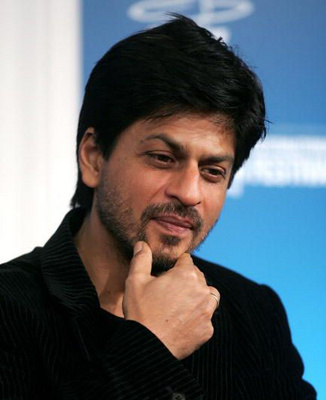
Shahrukh khan
Shahrukh khan
"Chammak challo Ra.One" (video song) ShahRukh Khan,Kareena Kapoor
"Criminal Ra One" (video song) ShahRukh Khan,Kareena Kapoor

Monday, 14 November 2011

General pervez musharraf

General pervez musharraf Biography
In an article (the "International Herald Tribune" of June 16) on Pakistan's proxy invasion of Indian territory in the Kargil sector of Jammu & Kashmir, Mr.Selig Harrison, the well-known American analyst, says:" Recent information makes clear that the newly-installed Army Chief of Staff (COAS), Gen. Pervez Musharraf, has long-standing links with several Islamic fundamentalist groups."
Gen. Musharraf's past background has not received, from Indian and Western analysts, the attention it deserves, if one has to have a clearer understanding of his role in the proxy invasion.

Gen. Musharraf, a Mohajir of Azamgarh/Karachi origin, had subsequently settled down in Gujranwala in Punjab and prefers to project himself more as a Punjabi than as a Mohajir. He was commissioned in the Pakistan Army Artillery in 1964.

He had an undistinguished career till the 1980s, when he caught the eye of Gen.Zia-ul-Haq and Gen. Mirza Aslam Beg, another Mohajir COAS.

Gen. Zia, who preferred devoutly Muslim officers in important positions, chose Gen. Musharraf for advancement as he was, like Gen. Zia himself, a devout Deobandi and was strongly recommended by the Jamaat-e-Islami.

The first assignment given by Zia to him was in the training of the mercenaries recruited by various Islamic extremist groups for fighting against the Soviet troops in Afghanistan. It was during those days that Gen. Musharaff came into contact with Osama bin Laden, then a reputed civil engineer of Saudi Arabia, who had been recruited by the USA's Central Intelligence Agency (CIA) and brought to Pakistan for constructing bunkers for the Afghan Mujahideen in difficult terrain.

bin Laden initially made his reputation in Afghanistan not as a mujahideen or terrorist, but as a civil engineer who could construct bunkers in any terrain. He also developed the technique of constructing long tunnels to isolated Soviet and Afghan military posts. The Mujahideen used to suddenly emerge from these tunnels and surprise the Soviet and Afghan troops. The links, which Gen. Musharraf developed with bin Laden in those days, have subsequently remained strong.

It was alleged that Gen. Musharraf also developed a nexus with the narcotics smugglers of the North-West Frontier Province (NWFP). Even though the CIA valued his services in Afghanistan, the Narcotics Control officials of the US had reservations about him because of suspicions of his contacts with the narcotics smugglers.

That is one of the reasons why of all the senior Pakistani Army officers of today, Gen. Musharraf has had the least interactions with the US military establishment-- in the form of nomination for higher training in the US, participation in seminars and exercises and visits to US military establishments. His bio-data issued by the Pakistan Army HQ. in October last at the time of his appointment as the COAS show that he has done two training courses in the UK. There was no mention of any course in the US.

Gen. Zia chose Gen. Musharraf (then a Brigadier) in 1987 to command a newly-raised Special Services Group (SSG) base at Khapalu in the Siachen area. To please Gen. Zia, Gen. Musharraf with his SSG commandos launched an attack on an Indian post at Bilfond La in September, 1987,and was beaten back. Despite this, he continued to enjoy the confidence of Zia.

Gen. Musharraf has since then spent seven years in two tenures with the SSG and prides himself on being an SSG commando and projects himself as the greatest expert of the Pakistan Army in mountain warfare. When he recently received Gen. Anthony Zinni, the Commanding Officer of the US Central Command, he was dressed as an SSG Commando.

In May,1988, the Shias, who are in a majority in Gilgit, rose in revolt against the Sunni-dominated administration. Zia put an SSG group commanded by Gen. Musharraf in charge of suppressing the revolt. Gen. Musharraf transported a large number of Wahabi Pakhtoon tribesmen from the NWFP and Afghanistan, commanded by bin Laden, to Gilgit to teach the Shias a lesson. These tribesmen under bin Laden massacred hundreds of Shias.

In its issue of May,1990, "Herald", the monthly journal of the "Dawn" group of publications of Karachi, wrote as follows: " In May,1988, low-intensity political rivalry and sectarian tension ignited into full-scale carnage as thousands of armed tribesmen from outside Gilgit district invaded Gilgit along the Karakoram Highway. Nobody stopped them. They destroyed crops and houses, lynched and burnt people to death in the villages around Gilgit town. The number of dead and injured was put in the hundreds. But numbers alone tell nothing of the savagery of the invading hordes and the chilling impact it has left on these peaceful valleys."

Gen. Musharraf started a policy of bringing in Punjabis and Pakhtoons from outside and settling them down in Gilgit and Baltistan in order to reduce the Kashmiri Shias to a minority in their traditional land and this is continuing till today. The "Friday Times" of October 15-21, 1992, quoted Mr. Muhammad Yahya Shah, a local Shia leader, as saying: " We were ruled by the Whites during the British days. We are now being ruled by the Browns from the plains. The rapid settling-in of Punjabis and Pakhtoons from outside, particularly the trading classes, has created a sense of acute insecurity among the local Shias."

Zia became the first victim of the carnage unleashed by Gen. Musharraf on the Shias of Gilgit. Though the Pakistani authorities have not released the report of the committee, which enquired into the crash of Zia's plane in August,1988, it is widely believed in Pakistan that a Shia airman from Gilgit, wanting to take revenge for the May,1988, carnage, was responsible for the crash.

During his days with the SSG in the Siachen area and in the Northern Areas (Gilgit and Baltistan), Gen. Musharraf developed a close personal friendship with Lt.Gen. (now retd) Javed Nasir, Director-General of the Inter-Services Intelligence (ISI), during Mr.Nawaz Sharif's first tenure as the Prime Minister and now his Adviser on intelligence matters, Maj.Gen. Zaheer-ul-Islam Abbasi, then a Brigadier, Lt.Gen. Mohd.Aziz, former No. 2 in the ISI till February this year and now the Chief of the General Staff (CGS), and Mr.Mohd Rafique Tarar, then a Judge and now the President of Pakistan.

All the four of them were devout Deobandis with strong links with Islamic fundamentalist parties and particularly with the Harkat-ul-Mujahideen (HUM, also known for some years as the Harkat-ul-Ansar ), which was declared by the US as an international terrorist organisation in 1997. Along with the Lashkar-e-Toiba,the HUM is a member of bin Laden's International Islamic Front for Jihad against the US and Israel.

Lt.Gen. Nasir was also an office-bearer of the Tablighi Jamaat, even while in service.

In the late 1980s, Brig. Abbasi was posted as the Military Attache in the Pakistani High Commission in New Delhi. He was expelled by the Government of India in 1989 after he was caught by the New Delhi police while receiving classified papers from a Government employee.

On his return to Pakistan, Brig. Abbasi was posted to the Siachen. Like Gen. Musharraf, he had a reputation of taking rash and irresponsible actions without the clearance of his superiors. He launched an attack on an Indian army post, which was repulsed with heavy Pakistani casualties.

Musharraf's Terror Links

The late Gen.Asif Nawaz Janjua, the then COAS, recalled him to Rawalpindi and wanted to dismiss him for launching the attack without his orders, but Lt.Gen. Nasir saved him from any punishment.
On September 8,1995, the Pakistani Customs stopped a car carrying heavy arms and ammunition near Kohat in the NWFP and arrested its driver and Saifullah Akhtar, the then patron of the HUM. On interrogation, they reportedly told the Customs authorities that the weapons had been procured by Brig. Mustansar Billa of the Pakistan Army at Darra Adamkhel for supply to the Kashmiri extremist groups.

The Pakistani army then took over the investigation and arrested a group of 40 army officers and 10 civilians headed by Maj.Gen.Abbasi. Mrs. Benazir Bhutto, then Prime Minister, alleged that this group had conspired to kill her and senior military officers, stage a coup and proclaim an Islamic state. They were secretly tried by a military court and sentenced to various terms of imprisonment.

Sections of the Pakistani press had alleged that the plotters had wanted to instal Gen. Musharraf as the head of the Islamic State, and that Gen. Aziz was also involved in the plot, but no action was taken against them for want of adequate evidence

Mr.M.H.Askari, a well-known columnist, wrote in the "Dawn" (October 18,1995) as follows: "It is said that the plotters had close links with the Hizbul Mujahideen and the Harkat-ul-Ansar, which are known for their involvement in international terrorism. It is also said that the arrested officers wanted Pakistan to become militarily involved in the Kashmir freedom struggle."

"The Nation" (October 20,1995) reported that Maj.Gen.Abbasi had close contacts with the Harkat-ul-Ansar. The "Khabrain" alleged that two of the arrested officers belonged to the ISI and that one of them had worked as the staff officer to Lt.Gen. Nasir, when he was DG, ISI.

"The Nation" of November 15,1995, reported: "Almost all the arrested officers are followers of the Tablighi Jamaat based in Raiwind." Raiwind, which is in the Punjab, is the hometown of the Prime Minister, Mr.Nawaz Sharif. It is also the headquarters of the HUM.

Pakistani analysts were surprised when Mr.Sharif appointed Gen.Musharraf as the COAS on October 8,1998, superseding Lt.Gen. Ali Kuli Khan, a Pakhtoon, who was the CGS, and Lt. Gen. Khalid Nawaz, a Punjabi, who was the Quarter-Master General. Mr.Sharif's choice of Gen. Musharraf was attributed to the following:
* He was strongly recommended by President Tarar and Lt.Gen. Nasir.
* He had ingratiated himself with Mr.Sharif by keeping the latter informed of the criticism of the Government's functioning by Lt.Gen.Ali Kuli Khan and Lt.Gen. Khalid Nawaz at theCorps Commanders' conferences when Gen. Jehangir Karamat was the COAS.
* Though a Mohajir, Gen. Musharraf disliked Mr. Altaf Hussain and his Muttahida Qaumi Movement (MQM). Mr. Sharif, therefore, wanted to use him to crush the MQM in Karachi.

Mr.Sharif and Gen. Musharraf got along very well till March. As desired by Mr.Sharif, the new COAS set up special military courts in Karachi to try the MQM cadres on charges of terrorism. Several of them were sentenced to death and two executed before the Pakistan Supreme Court, acting on a petition, declared these courts unconstitutional. It was alleged that Mr.Sharif was also planning to have Mr.Asif Zirdari, the husband of Mrs. Bhutto, tried as a terrorist by the military courts and sentenced to death for allegedly killing Murtaza Bhutto, her brother, in September, 1996.

Mr. Sharif also made the Army in charge of the Water and Power Development Authority (WAPDA) to put an end to corruption and labour trouble and to improve efficiency.

After the visit of Mr.Strobe Talbott, US Deputy Secretary of State, to Pakistan in the first week of February, Mr.Sharif also approved a plan submitted by Gen. Musharraf for shifting bin Laden's terrorist brigade from the Jalalabad area of Afghanistan to the Kargil area of India by taking advantage of the absence of the Indian army from this area during winter. It is reported that while Lt.Gen. Nasir strongly backed the plan, Lt.Gen, Ziauddin, the Director-General of the ISI, expressed strong reservations over it and pointed out that it could create problems for Pakistan with the US.

Gen. Musharraf transferred Lt.Gen. Aziz from the ISI to the Army HQ. as his CGS and made him responsible for its implementation through the Directorate of Military Intelligence. Lt.Gen. Nasir was kept in the picture about the implementation, but not Lt.Gen.Ziauddin.

While outwardly supporting the Lahore Declaration, Gen. Musharraf, with the backing of Lt.Gen. Nasir, went ahead implementing the plan. Bin Laden's terrorist brigade was transported to Skardu in the Northern Areas and from there infiltrated into the Kargil area along with a large number of Pakistani army regulars. Mr.Sharif was allegedly not kept in the picture about sending the army regulars into Indian territory along with the terrorist brigade.

In the February-March,1999, issue of the Pakistan "Defence Journal", Lt.Gen Nasir had written an article titled "Calling the Indian Army Chief's Bluff". While ostensibly supporting the Lahore initiative, Lt.Gen. Nasir wrote in the most contemptuous manner of the capabilities of the Indian army and said: "The Indian army is incapable of undertaking any conventional operations at present, what to talk of enlarging conventional conflict."

A perusal of the writings in the Pakistani media and professional journals since January,1999, shows that these irrational religious elements in the Pakistan army headed by Gen. Musharraf and senior retired officers who have been supporting Gen. Musharraf have embarked on this adventure in the Kargil area on the basis of the following assumptions:

* The morale in the Indian armed forces is low due to the "bad leadership" of Mr.George Fernandes, our Defence Minister. Lt.Gen.Assad Durrani, former DG of the ISI, has sarcastically referred to Mr.Fernandes as the "best Indian Defence Minister that Pakistan can hope to have."
* The BJP is a party of paper tigers, known more for their "verbosity" than for their actions.
* Pakistan's nuclear and missile capability has ensured that India would not retaliate against Pakistan for occupying the ridges in the Kargil area.
* The fear of the possible use of nuclear weapons would bring in Western intervention, thereby internationalising the Kashmir issue.
* Pakistan should agree to a ceasefire only if it was allowed to remain in occupation of the Indian territory. There should be no question of the restoration of the status quo ante.

The interviews and speeches of Gen. Musharraf since October, 1998, show his thinking to be as follows:
* The acquisition of Kashmir by Pakistan can wait. What is more important is to keep the Indian army bleeding in Kashmir just as the Afghan Mujahideen kept the Soviet troops bleeding in Afghanistan.
* Even if the Kashmir issue is resolved, there cannot be normal relations between India and Pakistan because Pakistan, by frustrating India's ambition of emerging as a major Asian power on par with China and Japan, would continue to be a thorn on India's flesh. And, so long as it does so, Pakistan would continue to enjoy the backing of China and Japan.

From March, Gen. Musharraf, to the discomfiture of Mr.Sharif, started coming out in his true colours. He issued an order that the army, as the supervisory authority, would conduct all future negotiations with the independent power producers, thereby denying any role in the matter to the politicians and civilian bureaucrats. When Mr.Sharif objected to this order, he declined to cancel it.

The COAS made out a list of all payment defaulters of the WAPDA and leaked to the press that Mrs.Abida Hussain, a Shia Minister of Mr.Sharif's Cabinet, was one of the major defaulters, thereby forcing her to resign. He has also been hinting to the press that the business enterprises of Mr.Sharif's family top the list of defaulters.

He then insisted that he should be given concurrent charge of the post of the Chairman of the Joint Chiefs of Staff Committee, even though it was the turn of Admiral Fasih Bokhari, the Chief of the Naval staff, to hold this charge. His argument was that since the army was the most important component of the armed forces, the Chairman should always be from the army. While not accepting this argument, Mr.Sharif gave him concurrent charge for one year only, as against the normal three years. He also got himself nominated as the Strategic Commander of Pakistan's nuclear force.

By May, Gen. Musharraf found to his surprise that the BJP-led Government was reacting vigorously to the invasion and had ordered the Indian Air Force to go into action against the invaders. It was only then that he reportedly told a shocked Mr.Sharif that he had sent in a large number of Pakistan army regulars with bin Laden's terrorist brigade and that the regulars were likely to incur heavy casualties.

The demand of the US and other Western powers for the withdrawal of the invaders and for the restoration of the status quo ante came as another surprise to him.

Despite this, he seems to be insisting that Pakistan should not agree to any unconditional withdrawal.

By: B.Raman, Director, Institute of Topical Studies, 1 July 1999
General pervez musharraf
Pakistan's former President General Pervez Musharraf At Stanford University - SAMAA TV Urdu
ormer Pakistan President / General Pervez Musharraf May Face Treason Charges.

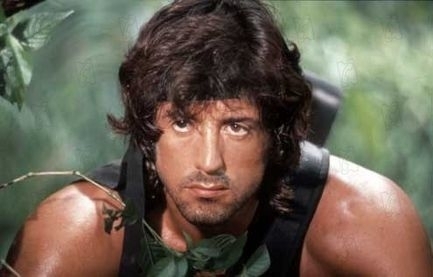
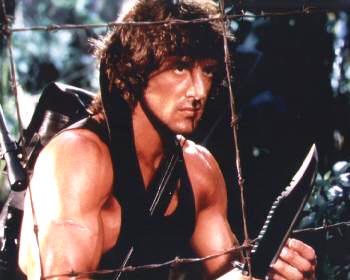
John rambo

John rambo Biography
Rambo is a hero of the United States Armed Forces. He has many medals earned from his
days serving in the Vietnam War. These medals include four Purple Hearts (a medal awarded for battle wounds), four bronze metals, two silver stars, a Distinguished Service Cross, and a Congressional Medal of Honor. Rambo was born in the small town of Bowie, Arizona. He is a medic, helicopter pilot, special forces soldier, light weapons specialist, and a reconaissance trooper. Rambo is still alive today and serving on first strike teams.
John rambo
John rambo
John rambo
John rambo
John rambo
John rambo
John rambo
John rambo
John Rambo Trailer
Rambo 2 - Soundtrack (HQ Audio)

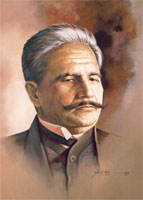
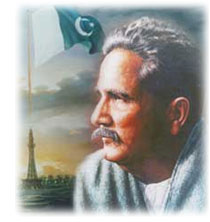
Allama Iqbal

Allama Iqbal's Biography
Birth
Iqbal was born in the Punjab on February 22, 1873. His ancestors, who were Kashmiri Brahmins, had embraced Islam two hundred years earlier. Iqbal’s own father was a devout Muslim with Sufistic bent of mind.

Primary Education

He received his early education in Sialkot. After passing the entrance examination, he joined Intermediary College. Mir Hassan, a great oriental scholar, had a special aptitude for imparting his own literary taste and to his students. Under his influence, Iqbal was drawn towards Islamic studies, which he regarded to be an outstanding favor that he could not forget it all his life.

Higher Education

Passing on to the Government College of Lahore, Iqbal did his graduation with English Literature, Philosophy and Arabic as his subjects. At the college he met Prof. Arnold and Sir Abdul Qadir. Iqbal’s poem, Chand (moon) and other early poems appeared in the journal (which belonged to Sir Abdul Qadir) in 1901 and were acclaimed by critics as cutting a new path in Urdu poetry.

It did not take him long to win recognition as a rising star on the firmament of Urdu literature.

In the mean time he had done his MA in Philosophy and was appointed as a Lecturer in History, Philosophy and Political science at Oriental College, Lahore. He then moved to Government College to teach Philosophy and English Literature.

Wherever Iqbal worked or thought his versatility and scholarship made a deep impression on those around him.

In Europe

Iqbal proceeded to Europe for higher studies in 1905 and stayed there for three years. He took the Honors Degree in Philosophy and taught Arabic at the Cambridge University in the absence of Prof. Arnold. From England, he went to Germany to do his doctorate in Philosophy from Munich and then returned to London to qualify for the bar. He also served as a teacher in the London school of Commerce and passed the Honors Examination in Economics and Political Science. During his stay in Europe Iqbal not only read voraciously but also wrote and lectured on Islamic subjects which added to his popularity and fame in literary circles.

Back in India

Iqbal returned to India in 1908. The poet had won all these academic laurels by the time he was 32 or 33. He practiced as a lawyer from 1908 to 1934, when ill health compelled him to give up his practice. In fact, his heart was not in it and he devoted more time to philosophy and literature than to legal profession.

He attended the meetings of Anjuman Himayat-I-Islam regularly at Lahore. The epoch making poems, Shikwa and Jawab-e-Shikwa, which he read out in the annual convention of it one year after another, sparkled with the glow of his genius and made him immensely popular. They became the national songs of Millet.

Iqbal’s other poems Tarana-e-Hind (The Indian anthem) and Tarana-e-Milli (the Muslim Anthem) also became very popular among masses and used to be sung as symbols of National or Muslim identity at public meetings.

The spirit of Change

The Balkan wars and the Battle of Tripoli, in 1910, shook Iqbal powerfully and inflicted a deep wound upon his heart. In his mood of anger and frustration, he wrote a number of stirring poems, which together with portraying the anguish of Muslims were severely critical of the West.

The spirit of change is evident in poems like Bilad-e-Islamia (the lands of Islam), Wataniat (Nationalism), Muslim, Fatima Bint Abdullah (who was killed in the siege of Cyrainca, Siddiq, Bilal, Tahzib-e-Hazir (Modern civilization) and Huzoor-e-Risalat Maab Mein (in the presence of Sacred Prophet).

In these poems, Iqbal deplores the attitude of Muslim leaders who lay a claim to Islamic leadership and yet are devoid of a genuine spiritual attachment to the blessed Prophet.

The turning point in Iqbal’s Life

Iqbal was shaken by the tragic events of World War I and the disaster the Muslims had to face. The genius had passed through the formative period. He had attained maturity as a poet, thinker, seer and crusader who could read the signs of tomorrow in the happenings of today, make predictions, present hard facts and unravel abstruse truths through the medium of poetry and ignite the flame of faith, Selfhood and courage by his own intensity of feeling and force of expression. Khizr-e-Raah (The Guide) occupies the place of pride among the poems he wrote during this period. Bang-e-Dara (The caravan bell) published in 1929 has held a place of honor in Urdu poetry and world poetry.

Iqbal preferred Persian for poetic expression because its circle was wider than that of Urdu in Muslim India. His Persian works, Asrar-e-khudi (Secrets of the self), Rumuz-e-Bekhudi (Mysteries of Selflessness), Payam-e-Mashriq (Message of the East), Javed Nama (The Song of Eternity) belong to the same period of his life. And so is Reconstruction of Religious Thoughts in Islam, which was extensively appreciated and translated into many languages. Academies were set up in Italy and Germany for the study of Iqbal’s poetry and philosophy.

Politics

In 1927 the poet was elected to the Punjab Legislative assembly. In 1930, he was elected to preside over at the annual session of Muslim League. In his presidential address at Allahabad, Iqbal for the first time introduced the idea of Pakistan. In 1930-31, he attended the Round Table conference, which met in London to frame a constitution for India.

In Spain

While in England, Iqbal accepted the hospitality of Spain. He also went to Cordoba and had the distinction of being the first Muslim to offer prayers at its historical mosque after the exile of Moors. Memories of the past glory of Arabs and their 800-year rule over Spain were revived in his mind and his emotions were aroused by what he saw.

Meeting with Mussolini

In Italy Iqbal was received by Mussolini who had read some of his works and was aquatinted with his philosophy. They had long meetings and talked freely to each other.

The Universities of Cambridge, Rome and Madrid and the Roman Royal society organized meetings in his honor. On his way back he also went to Jerusalem to attend the International Conference of Motamar-i-Isalami.

In Afghanistan

At the invitation of King Nadir Shah, Iqbal visited Afghanistan in 1932. The king received the poet with great honor and met hi privately, as well during which he laid bare his heart. The two talked and wept.

Iqbal’s Death

The last phase of Iqbal’s life was embittered with constant illness. But as regards his creative activities this product was most productive. He kept in touch with every question of the day and continued composing beautiful verses.

A few minutes before his death he recited these touching lines:

The departed melody may return or not!

The zephyr from Hijaz may blow again or not!

The days of this Faqir has come to an end,

Another seer may come or not!

Although Iqbal’s was long and protracted the end was sudden and verypeaceful. He breathed his last in the early hours of April 21, 1938, in the arms of his old and devoted servant, leaving behind a host of mourners all over the Islamic world. There was a faint smile playing on his lips, which irresistibly reminded one of the last criterions, which he laid down for a truthful Muslim.

I tell you the sign of a Mumin-

When death comes there is smile on his lips.

Note: The above biography is a summarized version from Glory of Iqbal by Syed Abul Hasan Ali Nadwi

[republished with permission from www.jaihoon.com]

Date/Time Last Modified: 6/2/2004 2:51:33 PM
Allama Iqbal
Allama Iqbal
Allama Iqbal
Allama Iqbal
Allama Iqbal
Allama Iqbal
Allama Iqbal
Allama Iqbal
Allama Iqbal
Who Is Allama Iqbal?? 2 of 8 (A Geomentary attempt to introduce Iqbal)

Quaid e azami

Quaid e azami Biography
Muhammad Ali Jinnah also known as Quaid-e-Azam is one of the greatest leaders of sub-continent. Learn more about him.

Muhammad Ali Jinnah, also known as "Quaid-e-Azam" in the history of India, is not only a great leader of Muslims of Indian sub-continent but he also holds an important position in the row of world politicians. The thing that distinguishes him from others leaders of the world is that he used Britain's constitution to defeat Britains and won independence for his nation although he had to face stiff resistance from British government and great opposition from the Hindus' Indian National Congress.

Muhammad Ali Jinnah was born in Karachi on 25th December 1876. His father's name was Poonja Jinnah, who was a merchant. He received his primary education from "Sindh Mudrasatul-Islam" in Karachi. After completing his primary education, he left for England, where he got admission in law and soon become a barrister. After completing his education, he came back to India and helped his father to overcome financial crises. Once Jinnah decided to give up his education but then he realized his mistake and started his education again.

After coming back to India, he went to Bombay to start his practice. In the beginning, he faced some problems in getting cases but even at that time he refused to accept anyone's help and soon overcome this crisis. In the begging Jinnah was a great supporter of Hindu-Muslim unity, so, he joined All India National Congress. In 1913 Jinnah joined Muslim League and took an active part to make it effective.
Quaid e azami
Quaid e azami
Quaid e azami
Quaid e azami
Quaid e azami
Quaid e azami
Quaid e azami
Quaid e azami
Quaid e Azam Muhammad Ali Jinnah and his original grave
Quaid-e-Azam Muhammad Ali Jinnah - The greatest Leader and Founder of Pakistan

Nusrat fateh ali khan

Nusrat fateh ali khan Biography
Nusrat Fateh Ali Khan was famous for Qawwali (Qawwali is the devotional music of sufi muslims expressing their love for God sung by a group). He was born in  the city of Faisalabad in  Pakistan on October 13, 1948. The meaning of “Fateh” in Punjabi language is “to Win or Conquer“ and meaning of “Nusrat” in arabic is also “Victory”. Nusrat Fateh Ali Khan also won the hearts of millions of million people with his Qawwalis and unique style of singing. He was the fifth child of Ustad Fateh Ali Khan. In his family they have four sisters and one younger brother they all are lived in central Lyallpur. The major occupation of his family is Qawwali which was started 600 years ago. Nusrat's father did not want his son to adopt the family business. He want Nusrat to  select a more respectable career  by becoming a doctor or an engineer, because at that times Qawwals are treated with low social status. However, Nusrat showed his interest in Qawwali that his father finally changed his mind and started to train him in the art. Then Nusrat started to play tabla, alongside his father and he learnt Raag Vidya and bolbandish. His father has died in 1964, after the death of his father his uncle Mubarak Ali Khan and Ustad Salamat Ali Khan provided the requisite training to him. He gave his first performance known as “Chehlum” after the forty days of his father’s death. In 1971 he became a leader of his Qawwali party.  As a leader of Qawwali party he gave his first public performance in Pakistan known as “Jashn-e-baharan “ organised by Radio Pakistan.

Nusrat Fateh Ali Khan mostly sang in Punjabi and Urdu and also in Brajbhasha, Hindi and Parsian (farsi). His best hit performance was “Haq Ali Ali” which was performed with folk style and traditional instruments. He sang for many pakistani movies and also for two bollywood movies “Aur Pyaar Ho Gayaa” and “Kachche Dhaage” before his death. He also performed the  title song of the film "Dhadkan". As well gave background music in many hindi movies. He reached out to Western audiences with a couple of fusion records produced by Canadian guitarist Michael Brook. In 1995, he collaborated with Eddie Vedder on the soundtrack to Dead Man Walking. His contribution to that and several other soundtracks and albums (including The Last Temptation of Christ), as well as his friendship with Peter Gabriel, helped to increase his popularity in Europe and the United States. Peter Gabriel’s Real World label released five albums of Nusrat’s traditional Qawwali performances in the West. He also performed traditional Qawwali live to Western audiences at several WOMAD world music festivals. Nusrat Fateh Ali Khan went to London and his first british performance was organised by ”Oriental Star Agencies “ in Brimingham.

His name is among the Guinness Book of World Records as a Qawwali artist. Nusrat died in London with kidney and lever failure on Saturday, August 16th, 1997.
Nusrat fateh ali khan
Nusrat Fateh Ali Khan - Must Nazron Se Allah Bachaye
Tumhein dillagi bhool --- Sir Nusrat Fateh Ali Khan

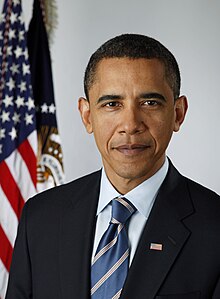
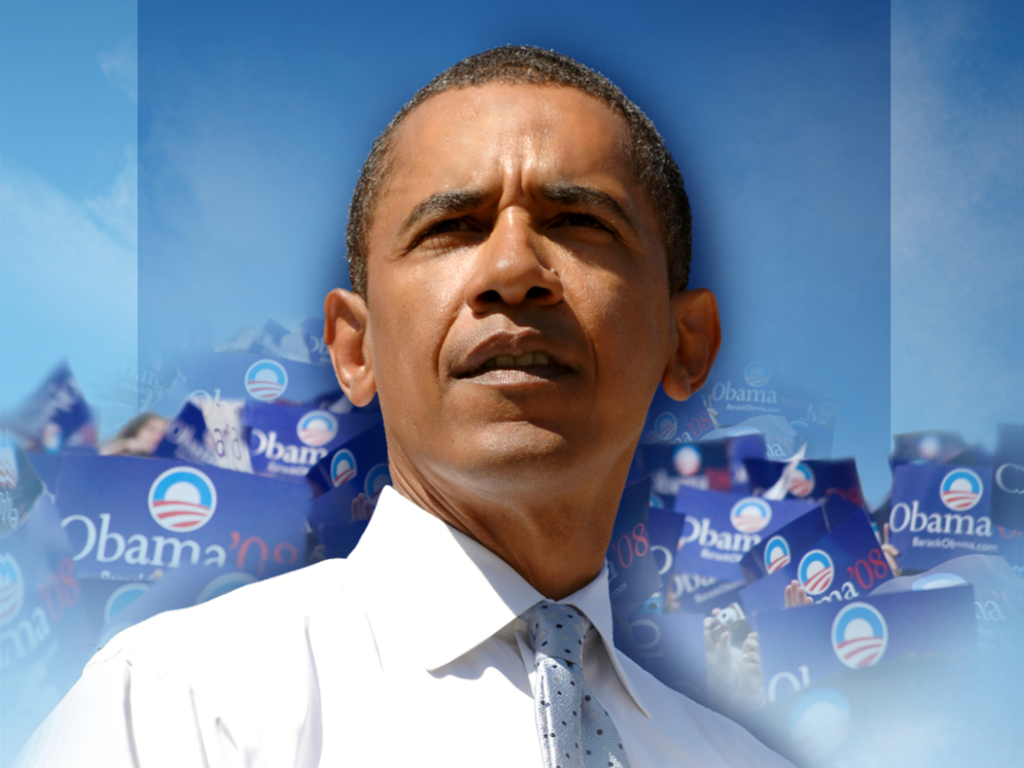
Obama

Obama biography
Barack Obama is one of the most exciting presidential election candidates in many years. Our Barack Obama biography is printable, concise and free of politics. This bio of Barack Obama gives you the picture of the whole man, his family, his parents, a Barack Obama history, his timeline, religion and even some key campaign points. The one-page Barack Obama biography summarizes his key accomplishments, his life, and what makes him special. Whether it's questions of Barack's religion (is he Muslim - no, he's not), or his family and origins, our biography gives you a complete bio & history of Barack Obama.


So, click below whether you're looking for insights into Senator Barack Obama's religion, family, history, books or just a great biographical recap of his life's timeline.
Obama
Obama
Obama
Obama
Obama
Obama
Obama
Obama

President Obama's Press Conference on the G20 Summit
President Obama Speaks About the US-France Alliance